
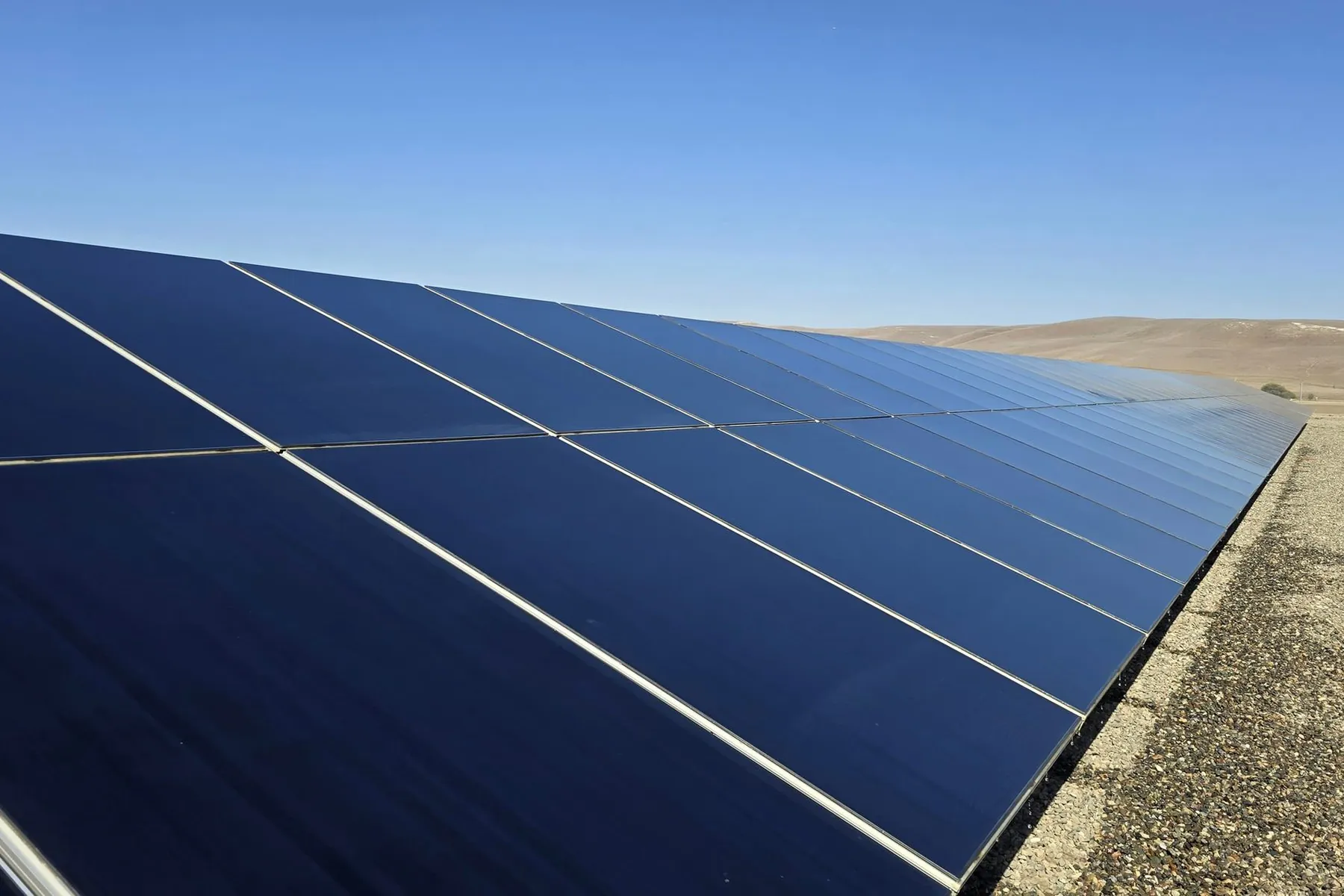
Dust is a thin film, but it blocks light all day, every day, until something washes it off.
Why the valley is different
The San Joaquin Valley is farm country with a long dry season. Tilling, harvest, dirt roads and freeway traffic put fine particles in the air, and on a dry roof they settle and stay.
First Solar monitored test panels across California and reported soiling of up to 11.5% per month in heavy agricultural areas (Gostein and others, IEEE Journal of Photovoltaics, 2012).
Location matters more than averages
In the 2006 Kimber study, Central Valley suburban and highway sites lost output almost twice as fast as rural ones. NREL's review of soiling station data notes that losses can jump during local farming, tilling or construction nearby.
That's why two homes in the same city can need very different schedules.
Why a light rain doesn't fix it
NREL could not find one rain amount that reliably cleans panels: in its data, small rains sometimes cleaned and sometimes didn't, and panels didn't always return to full output after rain. Bird droppings and baked-on film usually need a real wash.
We wash with soft brushes and a spot-free rinse, so the glass dries clear instead of leaving hard-water spots.